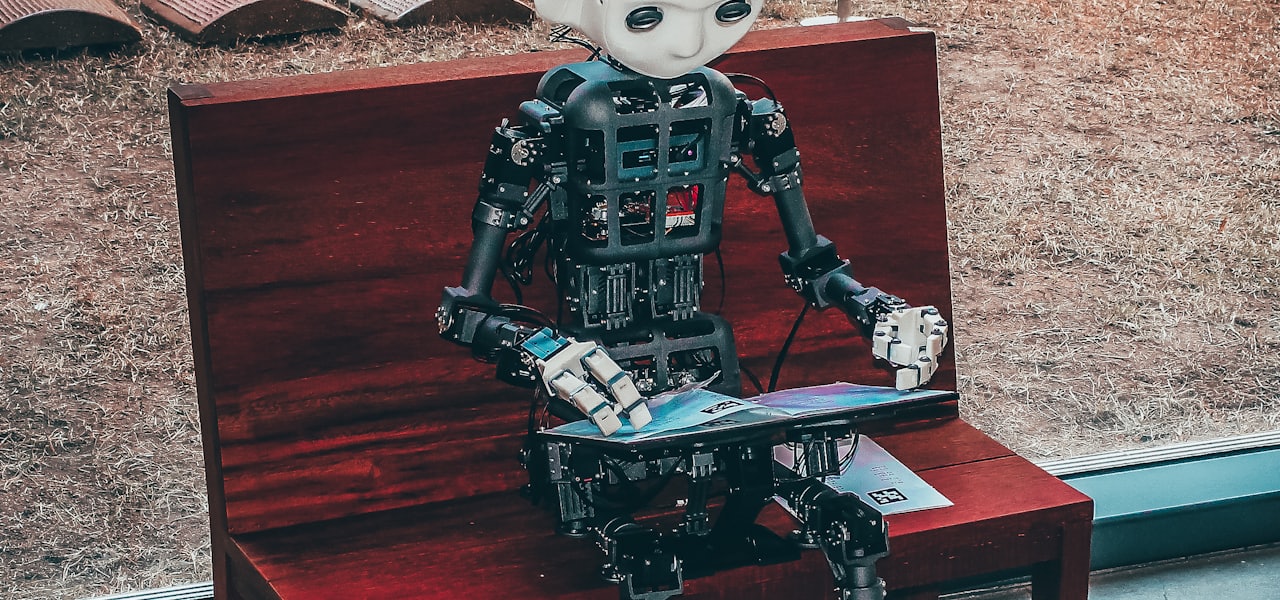
Retained mode in computer graphics is a major pattern of API design in graphics libraries, in which the graphics library, instead of the client, retains the scene (complete object model of the rendering primitives) to be rendered and the client calls into the graphics library do not directly cause actual rendering, but make use of extensive indirection to resources, managed – thus retained – by the graphics library. It does not preclude the use of double-buffering. Immediate mode is an alternative approach. Historically, retained mode has been the dominant style in GUI libraries; however, both can coexist in the same library and are not necessarily exclusionary in practice. == Overview == In retained mode the client calls do not directly cause actual rendering, but instead update an abstract internal model (typically a list of objects) which is maintained within the library's data space. This allows the library to optimize when actual rendering takes place along with the processing of related objects. Some techniques to optimize rendering include: managing double buffering treatment of hidden surfaces by backface culling/occlusion culling (Z-buffering) only transferring data that has changed from one frame to the next from the application to the library Example of coexistence with immediate mode in the same library is OpenGL. OpenGL has immediate mode functions that can use previously defined server side objects (textures, vertex buffers and index buffers, shaders, etc.) without resending unchanged data. Examples of retained mode rendering systems include Windows Presentation Foundation, SceneKit on macOS, and PHIGS.
List of Go software and tools
This is a list of Go software and tools, including compilers, development environments, build tools, testing frameworks, web frameworks, database tools, and related software for the Go programming language. == Core toolchain == Go — programming language and toolchain go command — build and package tool gofmt — source code formatter go vet — static analysis tool == Compilers and runtimes == gc — default Go compiler gccgo — GCC front end for Go GopherJS — Go-to-JavaScript compiler gollvm — Go compiler using the LLVM backend llgo — experimental Go frontend for LLVM TinyGo — compiler for embedded systems and WebAssembly Yaegi — Go interpreter == Development environments and editors == Emacs — text editor with Go support GoLand — JetBrains integrated development environment LiteIDE — Go-focused integrated development environment Neovim — text editor with Go support TextMate — text editor with Go support Vim — text editor with Go support Visual Studio Code — editor with Go support == Language servers and editor tools == delve — debugger gopls — Go language server golangci-lint — lint runner revive — linter staticcheck — static analysis tool == Build, dependency and release tools == Air — live reload development tool dep — deprecated dependency manager Go modules — dependency management system Goreleaser — release automation tool Mage — build tool Task — task runner == Testing and benchmarking == benchstat — benchmark comparison tool Ginkgo — testing framework GoMock — mock generation tool testify — testing toolkit testing — standard testing package == Web frameworks and HTTP tools == Beego — web framework Caddy — web server Chi — router Echo — web framework Fiber — web framework Gin — web framework Gorilla Mux — router Hugo — static site generator Revel — web framework Traefik — reverse proxy and load balancer == RPC and API tools == Goa — API design framework gRPC — remote procedure call framework grpc-gateway — REST gateway oapi-codegen — OpenAPI code generator Swag — OpenAPI documentation tool == Database and ORM tools == Bun — SQL toolkit and ORM CockroachDB client libraries — database drivers and tools ent — entity framework GORM — object–relational mapper sqlx — SQL toolkit == Command-line and terminal tools == Bubble Tea — terminal user interface framework Cobra — command-line framework pflag — flag parsing library urfave/cli — command-line framework Viper — configuration library == GUI toolkits and application frameworks == Fyne — cross-platform graphical user interface toolkit == Documentation, generation and analysis == errcheck — unchecked error checker godoc — documentation tool goimports — import management tool mockgen — mock generator pkgsite — package documentation site Prometheus — monitoring and alerting toolkit stringer — code generation tool wire — dependency injection code generator == Package hosting and community services == GoCenter — former Go package repository pkg.go.dev — package documentation and discovery site proxy.golang.org — module proxy == Major applications written in Go == Consul — service networking platform Docker — containerization platform InfluxDB — time-series database written in Go Kubernetes — container orchestration platform Ollama — platform for running and managing large language models locally Terraform — infrastructure as code tool Vault — secrets management tool
Comparison of video editing software
This is a comparison of non-linear video editing software applications. See also a more complete list of video editing software. == General information == This table gives basic general information about the different editors: === Active === === Discontinued / Inactive === ==== Definition ==== professional: used for full length Hollywood movies; professional (small): mainly used for paid commercials, short films or podcasts/YouTube channels; prosumer: Mainly targeting private use, anything that can do more than just trimming a film; basic: trimming a film; == System requirements == This table lists the operating systems that different editors can run on without emulation, as well as other system requirements. Note that minimum system requirements are listed; some features (like High Definition support) may be unavailable with these specifications. "Unix" includes the similar Linux, BSD and Unix-like operating systems. == High definition/High resolution import == The table below indicates the ability of each program to import various High Definition video or High resolution video formats for editing. == Feature set == == Output options == Please note that recording to Blu-ray does not imply 1080@50p/60p . Most only support up to 1080i 25/30 frames per second recording. Also not all formats can be output.
Multi-focus image fusion
Multi-focus image fusion is a multiple image compression technique using input images with different focus depths to make one output image that preserves all information. == Overview == The main idea of image fusion is gathering important and the essential information from the input images into one single image which ideally has all of the information of the input images. The research history of image fusion spans over 30 years and many scientific papers. Image fusion generally has two aspects: image fusion methods and objective evaluation metrics. In visual sensor networks (VSN), sensors are cameras which record images and video sequences. In many applications of VSN, a camera can't give a perfect illustration including all details of the scene. This is because of the limited depth of focus of the optical lens of cameras. Therefore, just the object located in the focal length of camera is focused and clear, and other parts of the image are blurred. VSN captures images with different depths of focus using several cameras. Due to the large amount of data generated by cameras compared to other sensors such as pressure and temperature sensors and some limitations of bandwidth, energy consumption and processing time, it is essential to process the local input images to decrease the amount of transmitted data. == Multi-Focus image fusion in the spatial domain == Huang and Jing have reviewed and applied several focus measurements in the spatial domain for the multi-focus image fusion process, suitable for real-time applications. They mentioned some focus measurements including variance, energy of image gradient (EOG), Tenenbaum's algorithm (Tenengrad), energy of Laplacian (EOL), sum-modified-Laplacian (SML), and spatial frequency (SF). Their experiments showed that EOL gave better results than other methods like variance and spatial frequency. == Multi-Focus image fusion in multi-scale transform and DCT domain == Image fusion based on the multi-scale transform is the most commonly used and promising technique. Laplacian pyramid transform, gradient pyramid-based transform, morphological pyramid transform and the premier ones, discrete wavelet transform, shift-invariant wavelet transform (SIDWT), and discrete cosine harmonic wavelet transform (DCHWT) are some examples of image fusion methods based on multi-scale transform. These methods are complex and have some limitations e.g. processing time and energy consumption. For example, multi-focus image fusion methods based on DWT require a lot of convolution operations, so they take more time and energy to process. Therefore, most methods in multi-scale transform are not suitable for real-time applications. Moreover, these methods are not very successful along edges, due to the wavelet transform process missing the edges of the image. They create ringing artefacts in the output image and reduce its quality. Due to the aforementioned problems in the multi-scale transform methods, researchers are interested in multi-focus image fusion in the DCT domain. DCT-based methods are more efficient in terms of transmission and archiving images coded in Joint Photographic Experts Group (JPEG) standard to the upper node in the VSN agent. A JPEG system consists of a pair of an encoder and a decoder. In the encoder, images are divided into non-overlapping 8×8 blocks, and the DCT coefficients are calculated for each. Since the quantization of DCT coefficients is a lossy process, many of the small-valued DCT coefficients are quantized to zero, which corresponds to high frequencies. DCT-based image fusion algorithms work better when the multi-focus image fusion methods are applied in the compressed domain. In addition, in the spatial-based methods, the input images must be decoded and then transferred to the spatial domain. After implementation of the image fusion operations, the output fused images must again be encoded. DCT domain-based methods do not require complex and time-consuming consecutive decoding and encoding operations. Therefore, the image fusion methods based on DCT domain operate with much less energy and processing time. Recently, a lot of research has been carried out in the DCT domain. DCT+Variance, DCT+Corr_Eng, DCT+EOL, and DCT+VOL are some prominent examples of DCT based methods.
WinFIG
WinFIG is a proprietary shareware vector graphics editor application. The file format and rendering are as close to Xfig as possible, but the program takes advantage of Windows features like clipboard, printer preview, multiple documents etc. As of 2011, WinFIG is under active development, with new features being added regularly. == History == The first release was in March 2003 and based on the Amiga program AmiFIG by the same author, which is also an Xfig compatible vector drawing application. WinFIG was not created by porting the Xfig source code to Windows. It is an independent implementation. Starting with release 4.0 WinFIG was ported from MFC to the Qt toolkit as the application framework and thereby enabling the first release of a Linux version. After Version 7.8 the Version scheme changes to years with version 2021.1. == Interface and usability == WinFIG is designed to provide a clear, efficient and convenient graphical user interface. It allows working on multiple documents using an MDI user interface and provides unlimited undo and redo of actions. == Features == === Object creation === The basic types of objects in WinFIG are: Open and closed Splines Ellipses Polylines and Polygons Texts LaTeX formatted texts Arcs Images: PNG, GIF, JPEG, EPS and more Compound objects, which are hierarchical compositions of objects Objects can have several attributes, which depend on the object type: Line width Line style Line cap style Line join style Arrows Outline color, fill color and fill pattern === Object manipulation === move copy scale rotate align add/delete points from lines or splines copy object attributes Numerical input of point coordinates === Exports === WinFIG can export into various formats: Raster formats: GIF, JPEG, PNG, PPM, XBM, XPM, PCX, TIFF, SLD Formats for printed documents: PostScript, PDF, LaTeX, HP-GL (printer control language used by Hewlett-Packard plotters), Vector graphics formats: EPS, SVG, PSTricks, TPIC, PIC, CGM, Metafont, MetaPost, EMF, Tk. === Miscellaneous === Winfig can handle smart links. A smart link is a moving connection from a source to a target object. It is established by connecting the end point of a line or spline to another object. The connecting line or spline segment follows the movements of the target object. Smart links are useful for diagrams, graphs etc. WinFIG can show a grid and provides several magnet modes for constraining editing operations to discrete coordinates. Objects can be organized in layers to control their Z-order. This is important to control overlapping of filled shapes. Object library: drawings can be stored in a special sub-folder in the program installation directory, which makes them available in the library dialog for easy reuse.
Exploration–exploitation dilemma
The exploration–exploitation dilemma, also known as the explore–exploit tradeoff, is a fundamental concept in decision-making that arises in many domains. It is depicted as the balancing act between two opposing strategies. Exploitation involves choosing the best option based on current knowledge of the system (which may be incomplete or misleading), while exploration involves trying out new options that may lead to better outcomes in the future at the expense of an exploitation opportunity. Finding the optimal balance between these two strategies is a crucial challenge in many decision-making problems whose goal is to maximize long-term benefits. == Application in machine learning == In the context of machine learning, the exploration–exploitation tradeoff is fundamental in reinforcement learning (RL), a type of machine learning that involves training agents to make decisions based on feedback from the environment. Crucially, this feedback may be incomplete or delayed. The agent must decide whether to exploit the current best-known policy or explore new policies to improve its performance. === Multi-armed bandit methods === The multi-armed bandit (MAB) problem was a classic example of the tradeoff, and many methods were developed for it, such as epsilon-greedy, Thompson sampling, and the upper confidence bound (UCB). See the page on MAB for details. In more complex RL situations than the MAB problem, the agent can treat each choice as a MAB, where the payoff is the expected future reward. For example, if the agent performs an epsilon-greedy method, then the agent will often "pull the best lever" by picking the action that had the best predicted expected reward (exploit). However, it would pick a random action with probability epsilon (explore). Monte Carlo tree search, for example, uses a variant of the UCB method. === Exploration problems === There are some problems that make exploration difficult. Sparse reward. If rewards occur only once a long while, then the agent might not persist in exploring. Furthermore, if the space of actions is large, then the sparse reward would mean the agent would not be guided by the reward to find a good direction for deeper exploration. A standard example is Montezuma's Revenge. Deceptive reward. If some early actions give immediate small reward, but other actions give later large reward, then the agent might be lured away from exploring the other actions. Noisy TV problem. If certain observations are irreducibly noisy (such as a television showing random images), then the agent might be trapped exploring those observations (watching the television). === Exploration reward === This section based on. The exploration reward (also called exploration bonus) methods convert the exploration-exploitation dilemma into a balance of exploitations. That is, instead of trying to get the agent to balance exploration and exploitation, exploration is simply treated as another form of exploitation, and the agent simply attempts to maximize the sum of rewards from exploration and exploitation. The exploration reward can be treated as a form of intrinsic reward. We write these as r t i , r t e {\displaystyle r_{t}^{i},r_{t}^{e}} , meaning the intrinsic and extrinsic rewards at time step t {\displaystyle t} . However, exploration reward is different from exploitation in two regards: The reward of exploitation is not freely chosen, but given by the environment, but the reward of exploration may be picked freely. Indeed, there are many different ways to design r t i {\displaystyle r_{t}^{i}} described below. The reward of exploitation is usually stationary (i.e. the same action in the same state gives the same reward), but the reward of exploration is non-stationary (i.e. the same action in the same state should give less and less reward). Count-based exploration uses N n ( s ) {\displaystyle N_{n}(s)} , the number of visits to a state s {\displaystyle s} during the time-steps 1 : n {\displaystyle 1:n} , to calculate the exploration reward. This is only possible in small and discrete state space. Density-based exploration extends count-based exploration by using a density model ρ n ( s ) {\displaystyle \rho _{n}(s)} . The idea is that, if a state has been visited, then nearby states are also partly-visited. In maximum entropy exploration, the entropy of the agent's policy π {\displaystyle \pi } is included as a term in the intrinsic reward. That is, r t i = − ∑ a π ( a | s t ) ln π ( a | s t ) + ⋯ {\displaystyle r_{t}^{i}=-\sum _{a}\pi (a|s_{t})\ln \pi (a|s_{t})+\cdots } . === Prediction-based === This section based on. The forward dynamics model is a function for predicting the next state based on the current state and the current action: f : ( s t , a t ) ↦ s t + 1 {\displaystyle f:(s_{t},a_{t})\mapsto s_{t+1}} . The forward dynamics model is trained as the agent plays. The model becomes better at predicting state transition for state-action pairs that had been done many times. A forward dynamics model can define an exploration reward by r t i = ‖ f ( s t , a t ) − s t + 1 ‖ 2 2 {\displaystyle r_{t}^{i}=\|f(s_{t},a_{t})-s_{t+1}\|_{2}^{2}} . That is, the reward is the squared-error of the prediction compared to reality. This rewards the agent to perform state-action pairs that had not been done many times. This is however susceptible to the noisy TV problem. Dynamics model can be run in latent space. That is, r t i = ‖ f ( s t , a t ) − ϕ ( s t + 1 ) ‖ 2 2 {\displaystyle r_{t}^{i}=\|f(s_{t},a_{t})-\phi (s_{t+1})\|_{2}^{2}} for some featurizer ϕ {\displaystyle \phi } . The featurizer can be the identity function (i.e. ϕ ( x ) = x {\displaystyle \phi (x)=x} ), randomly generated, the encoder-half of a variational autoencoder, etc. A good featurizer improves forward dynamics exploration. The Intrinsic Curiosity Module (ICM) method trains simultaneously a forward dynamics model and a featurizer. The featurizer is trained by an inverse dynamics model, which is a function for predicting the current action based on the features of the current and the next state: g : ( ϕ ( s t ) , ϕ ( s t + 1 ) ) ↦ a t {\displaystyle g:(\phi (s_{t}),\phi (s_{t+1}))\mapsto a_{t}} . By optimizing the inverse dynamics, both the inverse dynamics model and the featurizer are improved. Then, the improved featurizer improves the forward dynamics model, which improves the exploration of the agent. Random Network Distillation (RND) method attempts to solve this problem by teacher–student distillation. Instead of a forward dynamics model, it has two models f , f ′ {\displaystyle f,f'} . The f ′ {\displaystyle f'} teacher model is fixed, and the f {\displaystyle f} student model is trained to minimize ‖ f ( s ) − f ′ ( s ) ‖ 2 2 {\displaystyle \|f(s)-f'(s)\|_{2}^{2}} on states s {\displaystyle s} . As a state is visited more and more, the student network becomes better at predicting the teacher. Meanwhile, the prediction error is also an exploration reward for the agent, and so the agent learns to perform actions that result in higher prediction error. Thus, we have a student network attempting to minimize the prediction error, while the agent attempting to maximize it, resulting in exploration. The states are normalized by subtracting a running average and dividing a running variance, which is necessary since the teacher model is frozen. The rewards are normalized by dividing with a running variance. Exploration by disagreement trains an ensemble of forward dynamics models, each on a random subset of all ( s t , a t , s t + 1 ) {\displaystyle (s_{t},a_{t},s_{t+1})} tuples. The exploration reward is the variance of the models' predictions. === Noise === For neural network–based agents, the NoisyNet method changes some of its neural network modules by noisy versions. That is, some network parameters are random variables from a probability distribution. The parameters of the distribution are themselves learnable. For example, in a linear layer y = W x + b {\displaystyle y=Wx+b} , both W , b {\displaystyle W,b} are sampled from Gaussian distributions N ( μ W , Σ W ) , N ( μ b , Σ b ) {\displaystyle {\mathcal {N}}(\mu _{W},\Sigma _{W}),{\mathcal {N}}(\mu _{b},\Sigma _{b})} at every step, and the parameters μ W , Σ W , μ b , Σ b {\displaystyle \mu _{W},\Sigma _{W},\mu _{b},\Sigma _{b}} are learned via the reparameterization trick.
Smoothing
In statistics and image processing, to smooth a data set is to create an approximating function that attempts to capture important patterns in the data, while leaving out noise or other fine-scale structures/rapid phenomena. In smoothing, the data points of a signal are modified so individual points higher than the adjacent points (presumably because of noise) are reduced, and points that are lower than the adjacent points are increased, leading to a smoother signal. Reducing noise by smoothing may aid in data analysis in two notable ways: Help uncover more meaningful information from the underlying data, such as trends. Provide analyses that are both flexible and robust. Many different algorithms are used in smoothing, most commonly binning, kernels, and local weighted regression. == Compared to curve fitting == Smoothing may be distinguished from the related and partially overlapping concept of curve fitting in the following ways: curve fitting often involves the use of an explicit function form for the result, whereas the immediate results from smoothing are the "smoothed" values with no later use made of a functional form if there is one; the aim of smoothing is to give a general idea of relatively slow changes of value with little attention paid to the close matching of data values, while curve fitting concentrates on achieving as close a match as possible. smoothing methods often have an associated tuning parameter which is used to control the extent of smoothing. Curve fitting will adjust any number of parameters of the function to obtain the 'best' fit. == Linear smoothers == In the case that the smoothed values can be written as a linear transformation of the observed values, the smoothing operation is known as a linear smoother; the matrix representing the transformation is known as a smoother matrix or hat matrix. The operation of applying such a matrix transformation is called convolution. Thus the matrix is also called convolution matrix or a convolution kernel. In the case of simple series of data points (rather than a multi-dimensional image), the convolution kernel is a one-dimensional vector. == Algorithms == One of the most common algorithms is the "moving average", often used to try to capture important trends in repeated statistical surveys. In image processing and computer vision, smoothing ideas are used in scale space representations. The simplest smoothing algorithm is the "rectangular" or "unweighted sliding-average smooth". This method replaces each point in the signal with the average of "m" adjacent points, where "m" is a positive integer called the "smooth width". Usually m is an odd number. The triangular smooth is like the rectangular smooth except that it implements a weighted smoothing function. Some specific smoothing and filter types, with their respective uses, pros and cons are: